If you are asking why your air source heat pump electricity bill is so high, the cause is usually easy to identify. Winter naturally raises consumption, but a bill far above expectations often points to settings, heat loss, sizing or tariff. Without that explanation, it is hard to tell whether the heat pump needs adjusting, repairing or leaving alone. This guide covers seven common causes, the checks you can make safely and the signs that call for an engineer.
It is written for Cornwall homeowners with an installed heat pump, or those considering one, who want to understand a high electricity bill.
An air source heat pump uses electricity to extract heat from the outside air and transfer it into a home's heating and hot water.
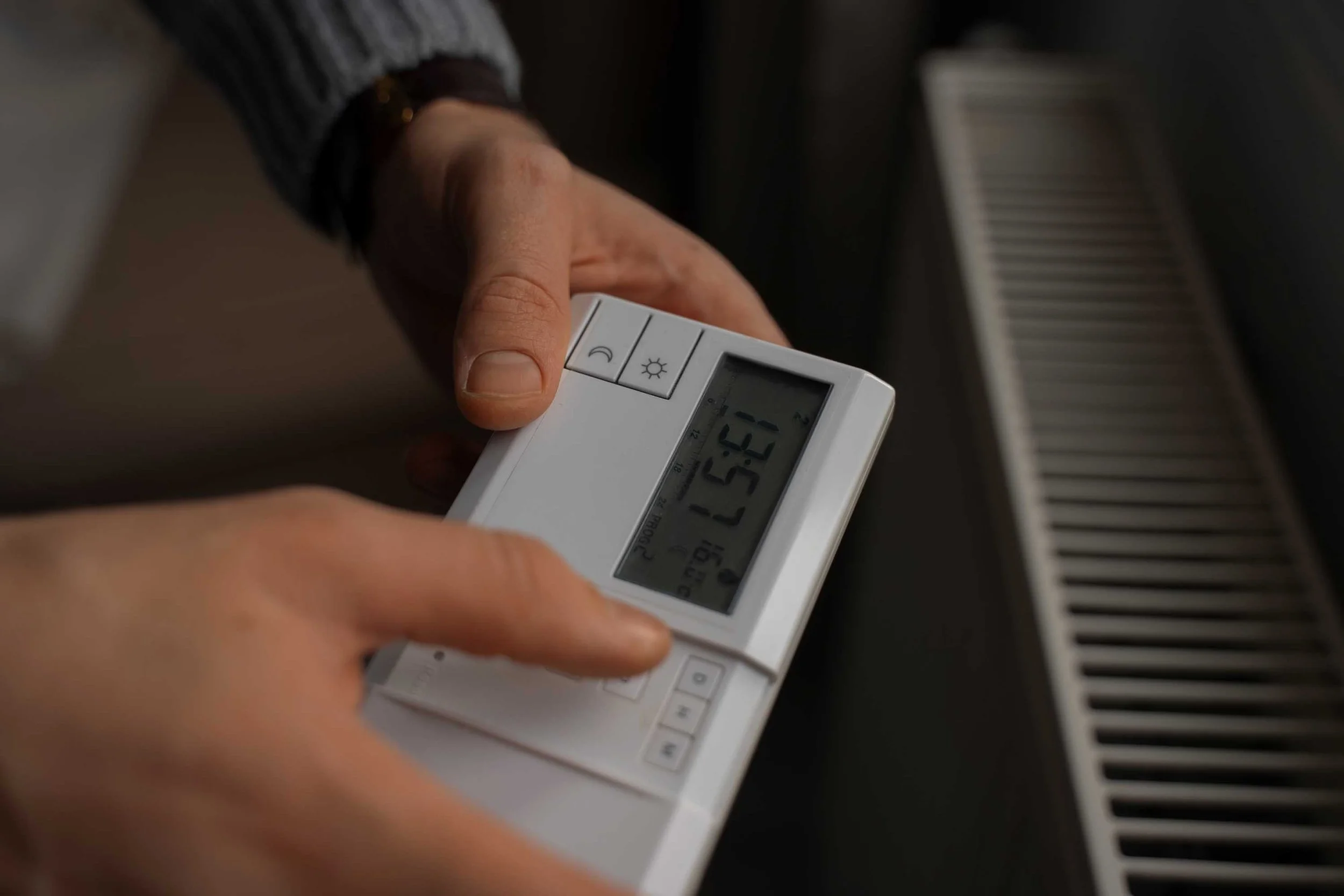
Is a Higher Heat Pump Bill Normal in Cold Weather?
Yes, to a degree. A heat pump runs for longer hours when it is cold, so it draws more electricity during the winter months. Grant UK estimates that a heat pump uses 63 per cent of its annual energy between November and February, citing its October 2024 Grant Aerona Handover Guide. That figure comes from one manufacturer, so treat it as a guide.
A heat pump is also less efficient as outdoor temperatures fall. The coefficient of performance (COP), heat delivered per kWh of electricity used, decreases when the air-source heat pump lifts heat from colder air, so it needs more energy to deliver the same amount of heat on the coldest days.
Replacing a gas or oil boiler moves the entire heating cost onto one electricity bill, changing how energy bills are split between fuels. Electricity is generally more expensive per unit than gas, so a heat pump must deliver enough heat per kWh to offset the difference. Which? states that a typical air source heat pump should generate three or more units of heat for each unit of electricity it uses.
For a fair comparison, use kWh across a full year rather than pounds in one month, because unit rates change. Ofgem's typical household figures describe a UK average home, and the average rarely matches a specific house, so your own meter history is the more reliable benchmark.
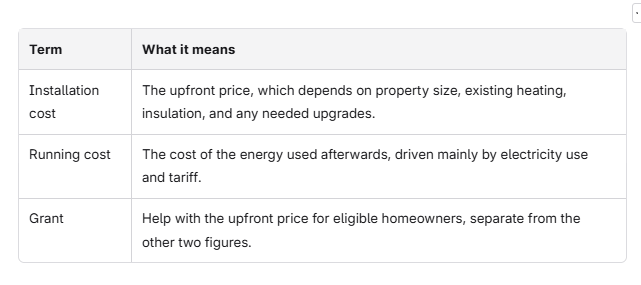
Heat Pump Cost, Running Cost and Grant Explained
Installation, running and grant figures are easy to confuse, so each is defined below.
Heat Pumps Explained: How They Compare With Gas or Oil Boilers
A gas boiler or oil boiler makes heat by burning fuel. An air-source heat pump doesn't generate heat that way because it moves heat that already exists outdoors. It uses the same refrigeration cycle as an air conditioner but moves heat into the house instead of out. This is why a heat pump can deliver more than one kWh of heat per kWh of electricity, while even efficient boilers deliver less than one kWh of heat per kWh of fuel.
Most heat pumps run at a lower temperature than a boiler, so radiators feel warm rather than hot. Heat pump heating is most efficient that way, but it requires proper system design, insulation, and suitable radiators or underfloor heating to achieve it. New-build homes and older houses each need an individual assessment.
A gas boiler also emits nitrogen oxides at the property, whereas a heat pump produces no combustion emissions at the point of use.
Seven Common Reasons for High Running Costs
1. Flow Temperature Set Too High
Flow temperature is how hot the water sent to radiators or underfloor heating is. High settings make an air source heat pump less efficient because it has to lift heat further. Heating that feels as hot as it did with a boiler suggests this cause. Weather compensation, which adjusts the heating water to outside conditions, can help. Ask your installer or follow the manufacturer's guidance before changing settings.
2. Hot Water and Backup Heater Use
Heating the cylinder usually requires hotter water than space heating, so the heat pump works harder. An immersion or backup heater is an electric element that produces roughly 1 kWh of heat per kWh of electricity, compared with several from the heat pump, and it draws more power. Check the cylinder setting and whether the immersion switch is on. If you use the backup heater often outside the coldest spells, it's worth asking an engineer.
3. Heating Schedule and Thermostat Habits
A large drop in room temperature at night followed by a morning boost makes the heat pump work harder and raises power consumption, as Grant UK's guidance explains. A heat-pump-suited schedule is gentler and more efficient, so follow your installer's controls guidance and ask for a review if it was never explained.
4. Insulation Level and Heat Loss
Poor home insulation increases electricity use because heat escapes as quickly as the heat pump supplies it, so you need more energy to stay comfortable. A well-insulated home needs less heat, and confirming that the loft and walls are insulated is a sensible first step.
5. System Design, Sizing and Radiators
Incorrect system sizing can cause heating inefficiency in an air source heat pump. An undersized heat pump runs at full output and may call on the backup heater, while an oversized heat pump switches on and off too often. Too-small radiators also force hotter water. Needs vary by property size and heat loss, so ask whether the design included a heat loss calculation. Replacing undersized radiators is a common remedy.
6. Electricity Tariff and Energy Supplier
Electricity tariffs can significantly affect running costs, and this is the one factor that requires no engineering input. Energy bills combine consumption and rate, so a tariff change can raise a bill without any change in heat pump use. Ofgem raised the price cap by 4 per cent for a typical household from 1 October to 31 December 2026, and VAT on domestic electricity is 0 per cent from 1 October 2026 to 31 March 2027. Fixed tariffs fall outside the cap, and Ofgem links the latest rise mainly to higher wholesale gas costs.
Heat pump and time-of-use tariffs usually offer lower rates at set times, such as at night, and require a smart meter. A suitable tariff can make heat pump use more cost-effective for some households, but the benefits aren't universal, so ask your energy supplier and compare pence per kWh and the standing charge before switching.
7. Maintenance, Airflow and the Outdoor Unit
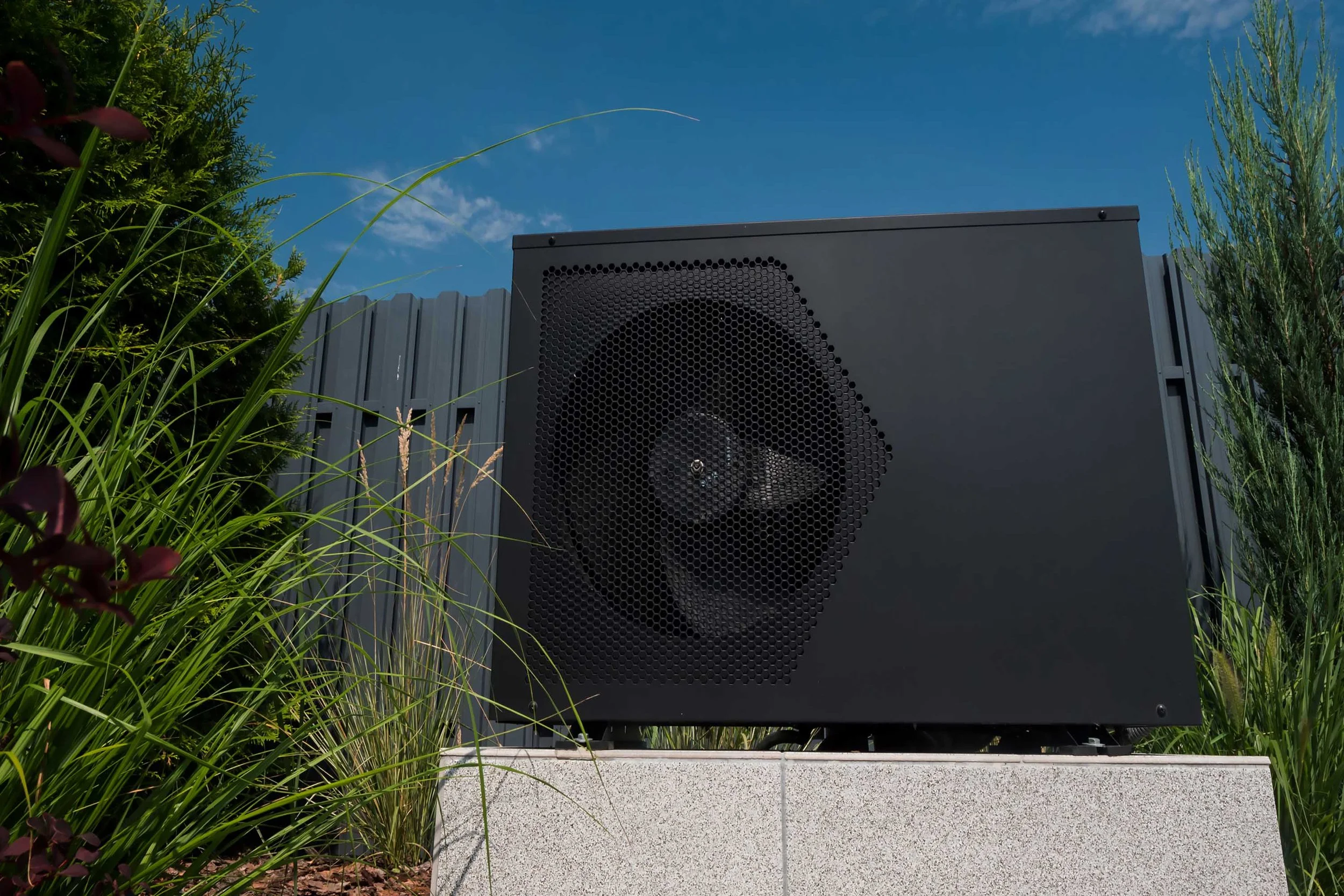
System maintenance is crucial for optimal efficiency. Blocked airflow around the heat pump can reduce efficiency, so keep leaves, plants and debris clear, as the Energy Saving Trust advises. In cold weather, the heat pump also runs defrost cycles, which use extra power and are a normal part of operation.
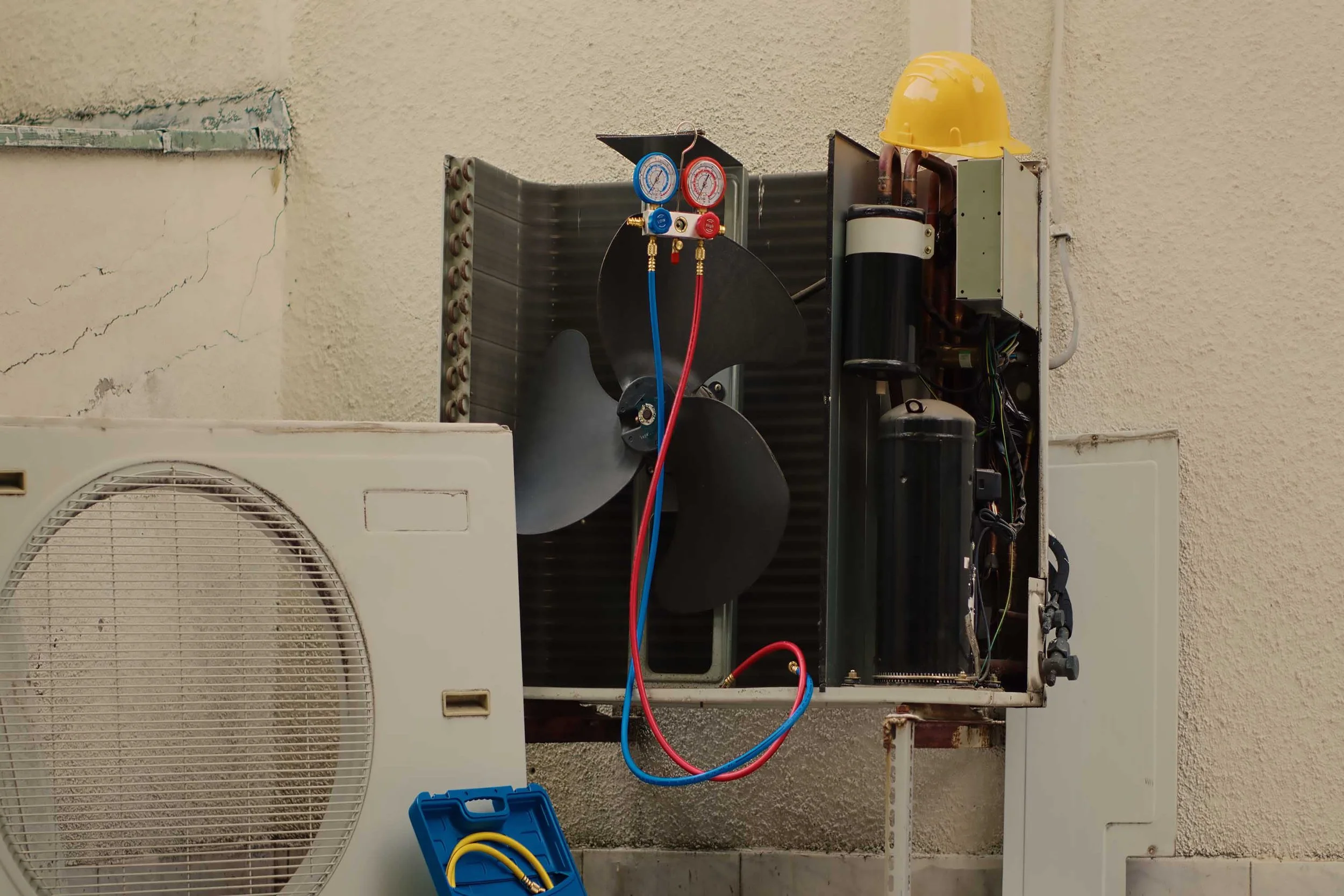
Servicing is the annual inspection and performance check that keeps a heat pump efficient and can catch problems early. A repair fixes a fault that has already appeared, such as poor heating, unusual noises or an error code.
Quick Checks Before You Call an Engineer
Work through these six checks in order, and stop at anything involving electrics, refrigerant or controls you do not understand.
Confirm the bill is real. Check that it uses an actual meter reading, not an estimate.
Compare fairly. Compare how much electricity was used in the same months last year, rather than judging one cold month in pounds.
Check your unit rate. Note the pence per kWh and standing charge, and ask whether a heat pump tariff is available to you.
Check the cylinder. Note the setting and whether the immersion switch is on.
Note heating habits. Record the heat pump set point, the schedule and any large drops or frequent boosts.
Inspect the outside of the heat pump. Clear loose leaves and debris, but do not open panels or touch refrigerant or electrical parts.
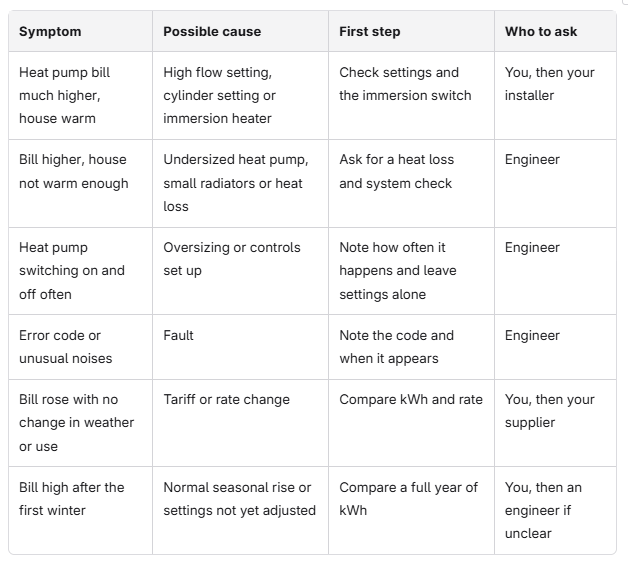
What Your Symptoms Might Mean
When to Call an Engineer
Contact a qualified engineer if the heat pump shows any of the following:
An error code on the display
Unusual noises
Rooms not reaching the set temperature
The backup heater running often outside the coldest spells
Very short run cycles, with the heat pump switching on and off repeatedly
Air Source Heat Pumps Cornwall is based in Sancreed, Penzance, Cornwall, and works with homeowners across Cornwall.
Thinking of Getting a Heat Pump Installed?
If you are replacing a gas boiler with a heat pump, ask each installer for a heat loss calculation and an estimated annual energy figure in kWh before comparing quotations. Installation costs also depend on upgrades such as larger radiators, a new hot water cylinder or additional electrical work, so check what each quotation includes. A heat pump installed without those upgrades may run less efficiently, so weigh estimated running costs, available grants and installer experience alongside the heat pump cost.
Eligible homeowners in England may be able to claim the Boiler Upgrade Scheme, a government grant, and the Energy Saving Trust explains the current terms. Its guidance notes that savings depend on the system being replaced, so annual savings differ between a gas boiler home and an oil boiler home.
Frequently Asked Questions
-
Usually, a handful of setup and design issues explain it, such as heating or cylinder settings set higher than needed, backup heater use, or a tariff change. Winter use also tends to raise a heat pump bill. Work through the quick checks above in that order, because each one narrows the cause before an engineer visit.
-
It varies by property size, insulation and settings, so no single average suits every home. Your installer's heat-loss calculation should include an estimate for your property. Compare that estimate with your meter's annual average, because a full year is fairer than one cold month.
-
There is no fixed number, because run time depends on the outdoor temperature, insulation and your schedule. A heat pump should run steadily at low output rather than cycle on and off frequently, so long hours in winter are normal. The Energy Saving Trust notes that a heat pump may need to run constantly. Raise very short cycles, or running flat out without warming rooms, with your installer.
-
A cold home usually means heat output falls short of heat loss. Common reasons are an undersized heat pump, radiators too small for the water temperature, poor insulation or a schedule that cannot recover in time. A fault, error code, or blocked airflow can also be to blame. Note which rooms stay cold and when, then ask an engineer to check sizing and settings.
-
Start with the causes you can influence: keep water temperature and cylinder settings no higher than comfort needs, use a steady schedule, ensure clear airflow around the heat pump, and schedule an annual service. Better insulation reduces how much heat you need, and a suitable tariff may lower what you pay. Follow your installer's guidance when changing settings, because results vary by home.
-
It can be, depending on three figures: heat demand in kWh, the heat pump's efficiency and the unit rate for each fuel. Divide heat demand by efficiency and multiply by the electricity rate. For a gas boiler, divide by boiler efficiency and multiply by the gas rate. Which? describes how to make this calculation.
-
They can be a more eco-friendly choice than gas or oil boilers, but the result depends on the electricity supply. A heat pump runs on grid electricity, and the share from renewable sources varies. Which? says a heat pump can lower a household's carbon footprint, although some carbon emissions remain. A renewable tariff or solar panels can further reduce the environmental impact.
Final Thoughts
A high air source heat pump electricity bill usually traces back to settings, hot water use, heat loss, design, tariff or maintenance. Winter use is expected to be higher, so comparing a full year of kWh gives a fairer picture than judging one cold month in pounds. The quick checks and symptom table above show which issues you can review yourself and which need a qualified engineer.
Air Source Heat Pumps Cornwall helps homeowners understand their options, whether their current system costs more than expected or they're planning a new installation. Use Get Free Quote on the Contact page to describe your property and what you have noticed, and the team can suggest next steps. Having your recent bills and the heat pump's make and model to hand will make that conversation faster and more useful.