Sometimes, but not always, and there is no simple answer that fits every home. Air source heat pumps send cooler water to your radiators than gas boilers do, so each radiator gives out less heat. In a well-insulated, energy-efficient home, that may still be enough. In an older home, some rooms can stay cold after you fit a heat pump until you enlarge or replace a radiator. A room-by-room heat loss calculation shows which rooms lose the most heat, and this guide explains how it works so you can make informed decisions before you agree to a quote.
Key points
Air source heat pumps run radiators at lower flow temperatures than boilers, so each radiator gives out less heat.
Rooms that lose the most heat need the most output to stay warm, so they are most likely to need larger radiators.
Many homes keep some existing radiators when they fit a heat pump, and underfloor heating is an alternative where radiators cannot be enlarged.
A qualified heating engineer should check the figures for your whole heating system before you commit.
Why a Heat Pump Can Need Bigger Radiators
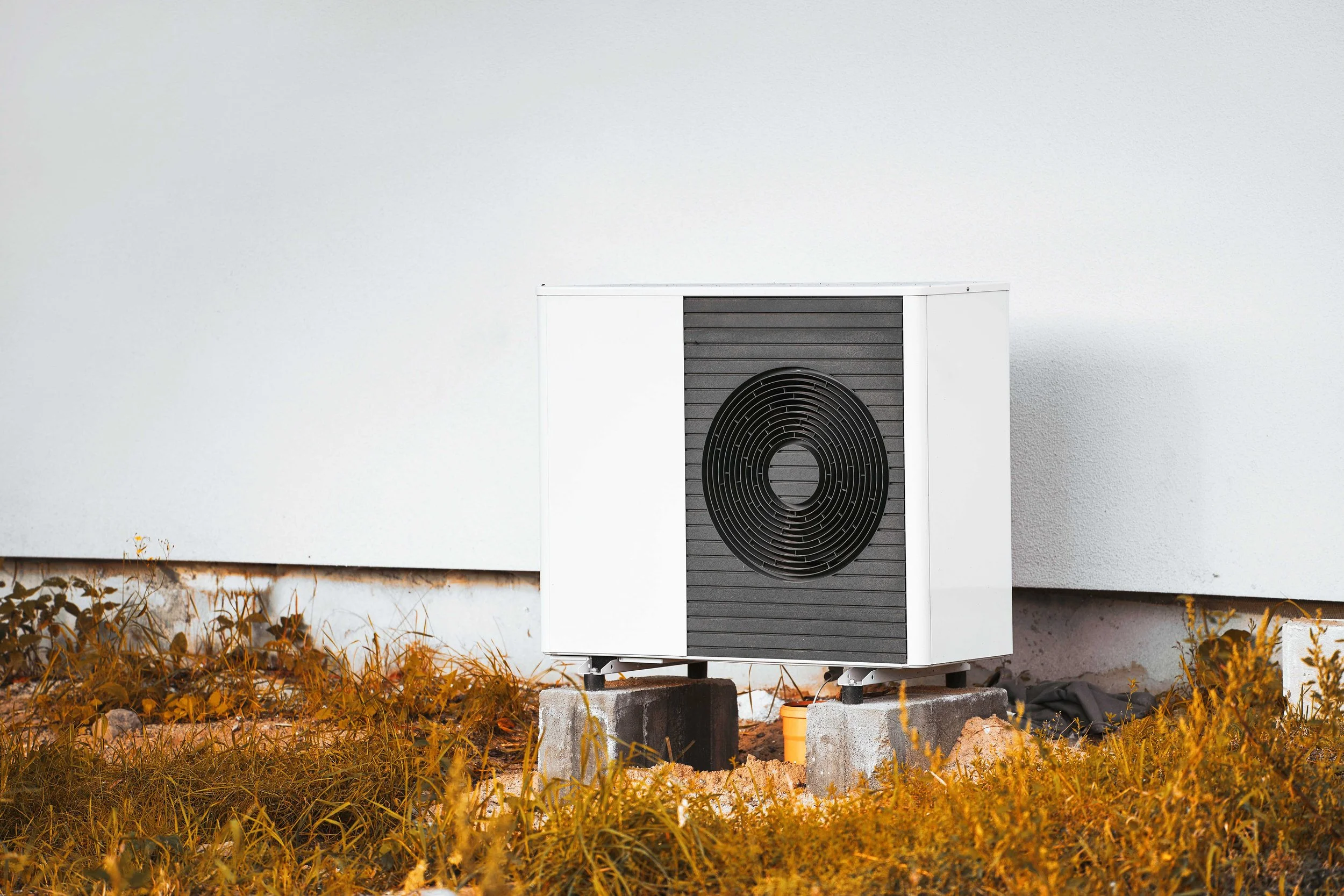
Traditional gas boilers and oil boilers typically send water to radiators at around 65 to 80°C, and radiators installed for them were sized for that hot supply. Air source heat pumps work differently. Unlike a gas boiler, an air source heat pump uses electricity to move heat from outside air into water rather than generate heat by burning fossil fuels. It is most efficient at lower temperatures, so the heat pump usually runs at a lower flow temperature, often between 35 and 45°C. Ground source heat pumps work in the same way, using heat from the ground, so the same radiator advice applies. Because much of the heat comes from outside air, air source heat pumps count as a renewable energy technology.
A cooler radiator gives out less heat, so reaching the same room temperature requires a larger surface area. That can mean a bigger radiator, or a double-panel radiator instead of a single-panel one in a colder room. Running the heating system hotter would restore the same output, but higher flow temperatures reduce efficiency and mean the heat pump uses more energy to deliver the same heat.
How Much Less Heat Does a Radiator Give at Lower Temperatures?
Radiator output is rated at an average water temperature of 70°C, which suits traditional boilers. Radiators transfer heat from the hot water circulating through them, so output falls quickly as the water cools, and boiler-designed heating systems lose output. The table shows a radiator rated at 1,000 W, calculated from the standard output correction in BS EN 442. The first row is typical of boilers, and heat pumps operate in the last two rows. The figures are approximate, and manufacturers publish exact values for each model.
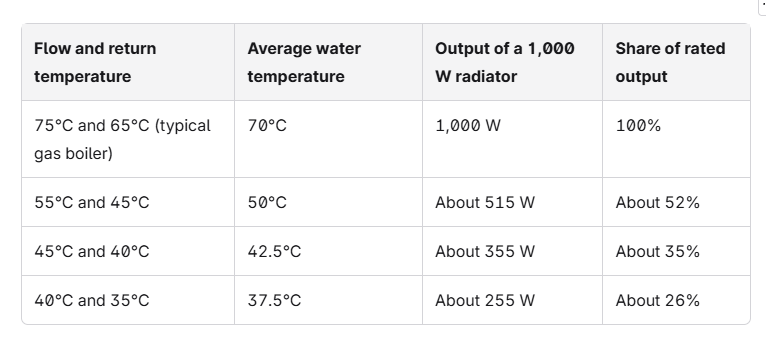
In practice, a room that loses 600 W of heat needs a radiator rated at about 1,700 W when the heat pump keeps the water at an average of 42.5°C, compared with 600 W at 70°C.
Do You Need to Replace All Your Radiators?
Not usually. Existing radiators work in many homes if they are compatible, even if they were sized for traditional boilers, and keeping them reduces upfront cost. The deciding factor is how much heat each room loses compared with what its radiator can give out at the lower temperature. In many homes, most radiators can stay after a heat pump is fitted, and only the rooms with the highest heat loss need larger ones. You will not need to replace a radiator that already meets its room’s heat loss, so rooms with little heat loss tend to keep their current radiators.
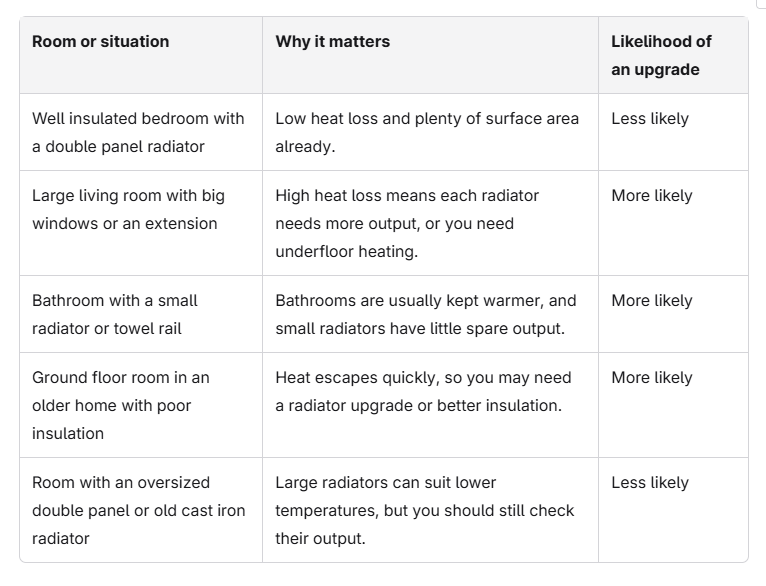
Insulation changes the answer. Better loft, wall and floor insulation reduces heat loss, improves energy efficiency and can cut the number of radiators that need upgrading, so most radiators can stay. Poor insulation has the opposite effect: it raises the output each room needs, and radiator upgrades may follow.
How the Right Radiator Size Is Worked Out
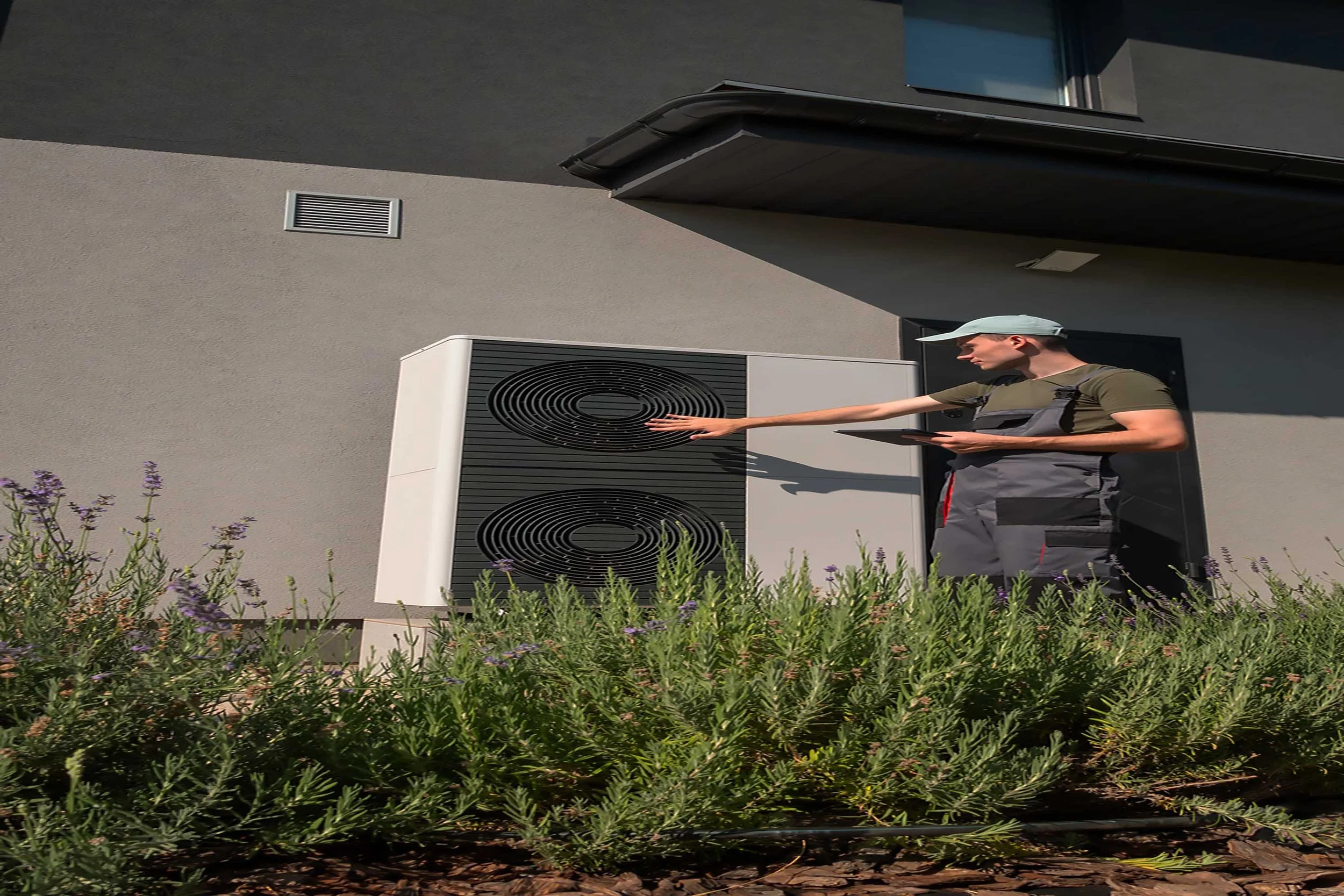
A qualified heating engineer works this out room by room for the whole heating system. The steps below describe the usual industry method, not any one company's process.
Calculate each room's heat loss from its size, walls, windows, floor, roof, and insulation.
Set a target temperature for each room, warmer for a bathroom than a bedroom.
Choose the heat pump's flow temperature, as low as the home allows.
Find each radiator’s output at the resulting water temperature from the manufacturer’s data.
Compare that output with the room’s heat loss and flag every radiator that falls short.
Choose a fix for each shortfall: a larger radiator, a double panel instead of a single panel, a different type, underfloor heating, or better insulation.
When output matches heat loss in every room, the house stays comfortable. Air source heat pumps run longer at a steady, low output, providing consistent warmth rather than short hot bursts. Smart controls can optimise radiator performance across the system by maintaining that pattern, and they help save energy by avoiding unnecessarily high flow temperatures.
Which Heat Pump Radiators Are Suitable?
Using radiators with a heat pump is common, and the right type depends on the room. Heat pump radiators are usually standard water radiators chosen to deliver enough output at a lower temperature, although newer models are designed specifically for heat pumps. The goal is to increase surface area or improve heat transfer. Radiators distribute heat by warming the surrounding air, so more surface area helps.
Double- or triple-panel radiators deliver more output than a single-panel radiator of the same height and width.
Aluminium radiators are highly conductive and warm up quickly, so they are often recommended for low-temperature heat pump systems because they transfer heat to the room quickly.
Fan-assisted radiators use a small fan to push more air across the radiator, moving more heat and raising output at a given water temperature.
Cast iron radiators are usually large and may suit lower temperatures, but they heat slowly, so a heating engineer should check them.
Check the Pipework Too
A radiator only reaches its rated output if enough hot water flows through it. A heat pump system usually circulates more water than most boilers to carry the same heat, so pipe size matters. 22 mm pipes suit main runs, 15 mm pipes are generally fine for single radiators, and 10 or 12 mm microbore pipes can restrict flow. During the survey, an engineer will check pipe sizes in the heating system, and some runs may need replacing before anyone can install the new system.
Alternatives: Underfloor Heating or a Higher Flow Temperature
Underfloor heating systems run at low water temperatures, which suits a heat pump system well. Underfloor heating can distribute heat more evenly than radiators, but it often costs more to install, particularly where floors must be lifted. Some homes use underfloor heating in extensions and radiators elsewhere.
The other option is a higher flow temperature, which gives existing radiators more output without needing to replace them. Efficiency falls as the temperature rises and the heat pump uses more energy, so this suits one or two rooms better than the whole heating system. Lower flow temperatures are more efficient, so ask your engineer to show the effect on running costs.
Heat Pump Installation: Radiator Costs and Grants
Radiator work is part of installing a new heat pump, and costs vary with the home. The Energy Saving Trust lists radiator upgrades as a factor in both installation and running costs. Some homes also need a new hot water cylinder or extra electrical work. Ask for a written quote for the full system that lists radiators separately, so the cost of any new radiators is clear.
The Boiler Upgrade Scheme currently offers £7,500 towards an air source heat pump for eligible homeowners in England and Wales, with a further £1,500 until March 2027 for homes with no mains gas. Funding may change, so check GOV.UK before you commit to an installation. To qualify, the company installing your heat pump must be MCS-certified.
Questions to Ask Your Installer
Ask whoever will install your heat pump to answer these in writing. A good heat pump installer will expect the questions.
Have you completed a room-by-room heat loss calculation for my home?
What flow temperature are you designing for?
Which radiators can stay, and what output will they give at that temperature?
Which rooms need larger radiators, and what type do you recommend?
Is my pipework the right size for the new heating system?
Is the radiator work itemised in the quote?
Radiators and Air Source Heat Pumps in Cornwall
Air Source Heat Pumps Cornwall is based in Sancreed, Penzance, and works with homeowners across the county. Every property needs an individual assessment, so the guidance above is a starting point, not a quote. Fitting a new heat pump is a sensible time to review the radiators and the rest of your heating system.
Frequently Asked Questions
-
No. Many homes keep some existing radiators with a heat pump, and only replace radiators in rooms where they can't meet the heat loss. The calculation decides which rooms need replacement, so replacing every radiator by default adds unnecessary cost.
-
It depends on the room and on the flow temperature, which is lower than boilers use. Some guides suggest radiators should be about 2.5 times larger than those sized for boilers, while others recommend two to three times the surface area. Treat these as starting points, because the heat loss calculation gives the real figure.
-
Sometimes, for one or two rooms. A higher temperature, closer to what boilers use, gives more output, but it lowers efficiency and raises electricity use. Ask your engineer to compare the running cost with a larger radiator.
-
Usually, if your home already has a central heating system that sends hot water to radiators. A heat pump replaces the gas boiler, and the engineer checks the radiators, pipework, hot water cylinder and the rest of the heating system. Small pipes or worn components may need attention before installation.
-
Yes. The unit sets the flow temperature for the whole system, and a lower flow temperature means cooler radiators that stay on for longer. Heat pumps are designed to operate this way to stay energy efficient, and a radiator that feels only warm to the touch can still be the right size.
-
Yes. Underfloor heating systems suit low-flow temperatures and heat pumps, though installation costs are often higher than radiators. Many homes use underfloor heating in some rooms and radiators in others.
-
If a room doesn't reach its target temperature on cold days, your current radiators may be too small for your heat pump. Only a heat loss calculation can confirm this, so ask for one before buying new radiators.
Get a clear answer for your home
Many homes keep several existing radiators, but rooms with high heat loss may need a larger radiator or a double-panel replacement. A room-by-room heat loss calculation from a qualified heating engineer replaces guesswork with figures and keeps the flow temperature low. Getting that calculation before you accept a quote lets you compare offers fairly, because radiator work can change a heat pump project's cost.